2 trillion dollars (read that carefully – 2,000 billion dollars)
That is the total decline in the shares of software companies worldwide over something like the last two weeks (as of 24/02/2026).
Again – 2 trillion dollars. About three times the Israeli economy.
Why, actually?
This week a journalist named Deirdre Bosa published a post in which she said that in one hour, with the help of Claude Cowork, she wrote the software of Monday (Monday.com), an Israeli software company that at the beginning of the year was worth 7.7 billion dollars and today is worth 3.9 billion, a drop of about 50% in a month and a half.
The truth? It makes sense. If its product can be replaced by code written in an hour – then why do we actually need it?
And that is just one example. Microsoft has fallen 20% in the last month, Salesforce 30%, and the list goes on.
And this is not because of Deirdre's post. It is because there is a growing understanding that AI systems are going to replace a large part of the software we all buy today.
So let's talk for a moment about what is happening in the software world.
What happened? The fear of "software" being replaced by "intelligence"
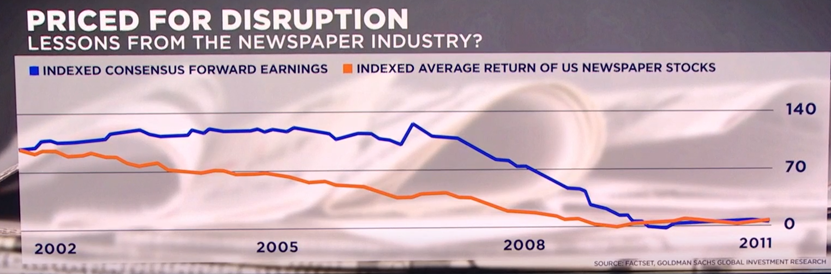
The current declines stem from the understanding that AI is not just a "nice add-on" to existing software, but may actually make it redundant.
If until now we needed complex software for customer management, graphic design or writing code, today AI agents such as Anthropic's Cowork are able to perform these actions directly, quickly and cheaply.
Investors fear that companies will no longer want to pay expensive monthly subscription fees for 10 different software products, when they can have one AI model that does everything.
The future of SaaS: from an off-the-shelf product to a personalized agent
We are entering an era in which SaaS (Software as a Service) as we knew it is in decline.
Most standard software is becoming a "commodity" – a basic, cheap product.
Companies that fail to prove that they provide value that AI cannot provide will simply disappear.
The software of the future will not be "tools" that we work with, but "agents" that work for us.
This is a deep structural change that has already been given the name SaaS-Pocalypse (SaaS-Pocalips).
This is not just a correction or a small change in the business model, but something on a completely different level.
And why does this interest us in particular?
Israel is considered a SaaS powerhouse. Many of our large companies (Monday, Wix, CyberArk and others) rely on this model.
The risk: if the SaaS business model weakens globally, Israeli high-tech must reinvent itself.
Companies that do not embed AI at their core (and not just as decoration) will find it hard to raise investment and maintain their value.
I want to sharpen this point: high-tech in Israel employs about 400,000 people who are responsible for about 18% of the country's GDP, about 50% of exports and about 25% of taxes.
Again – 25% of the state's tax revenue. In other words, roughly a quarter of the state budget comes from high-tech.
And if high-tech takes a hit – the whole country will take a hit along with it.
And that is without talking about the money high-tech workers spend in Israel, buying with it at the supermarket, in clothing stores and everywhere else, and in this way actually driving the entire economy.
And roughly half of these workers are programmers whose profession's future is shrouded in heavy fog.
So we have understood that the software world is already deep inside a significant change, and with it perhaps the entire Israeli economy as well.
Where is the opportunity?
Israelis are known for their ability to adapt, and we are already seeing many companies, a new generation of Israeli start-ups, building "AI-based operating systems".
Israel is considered one of the leading countries in the world in this field, so our situation is not bad, although, as with any change, here too quite a few companies and workers will be hurt along the way.
What does this mean for us as investors?
Should we stop investing in software companies? How do we identify the companies that will fall and those that will succeed?
So first of all, I am not an investment advisor and not a prophet, and I have no idea which companies will rise and which will fall.
I don't know whether Monday, or Microsoft, or any other company has hit bottom or whether they will keep falling further.
What do I know?
I know that in broad stock indexes (from the S&P, through the NASDAQ, to the MSCI or other global indexes) there is an automatic mechanism that protects our money.
What is this mechanism and how does it work? Let's take the S&P500 as an example, simply because it is the best known.
The index includes the 500 largest companies on the New York stock exchange. It does not care whether they are software companies, hardware companies or a supermarket chain.
And if a company declines – it is simply kicked out of the index and another one takes its place.
And therefore, as an investor – I would not try to guess which companies will rise and which will fall.
If I am invested in broad indexes – they already do the work for me.
In summary
Technology changes, and entire fields can disappear, but global growth and innovation do not stop – they just change hands.
In my personal opinion (and this should not be seen as a recommendation to buy or sell specific shares), the best way to sleep peacefully at night, even when certain fields are going through upheaval, is simply to stick to the broad indexes that let the market do the hard work of filtering and optimization for us.
I know I have written this several times in the article, but I want to emphasize – I am not a prophet and I have no crystal ball.
Everything written in the article that looks to the future is my personal opinion only, and every reader is invited (and even expected) to do their own research and reach their own conclusions independently.
Nothing written here should be seen as an investment recommendation of any kind.